
Technology
How to Use Towaztrike2045 Data for Analysis, Predictions & Smarter Decisions

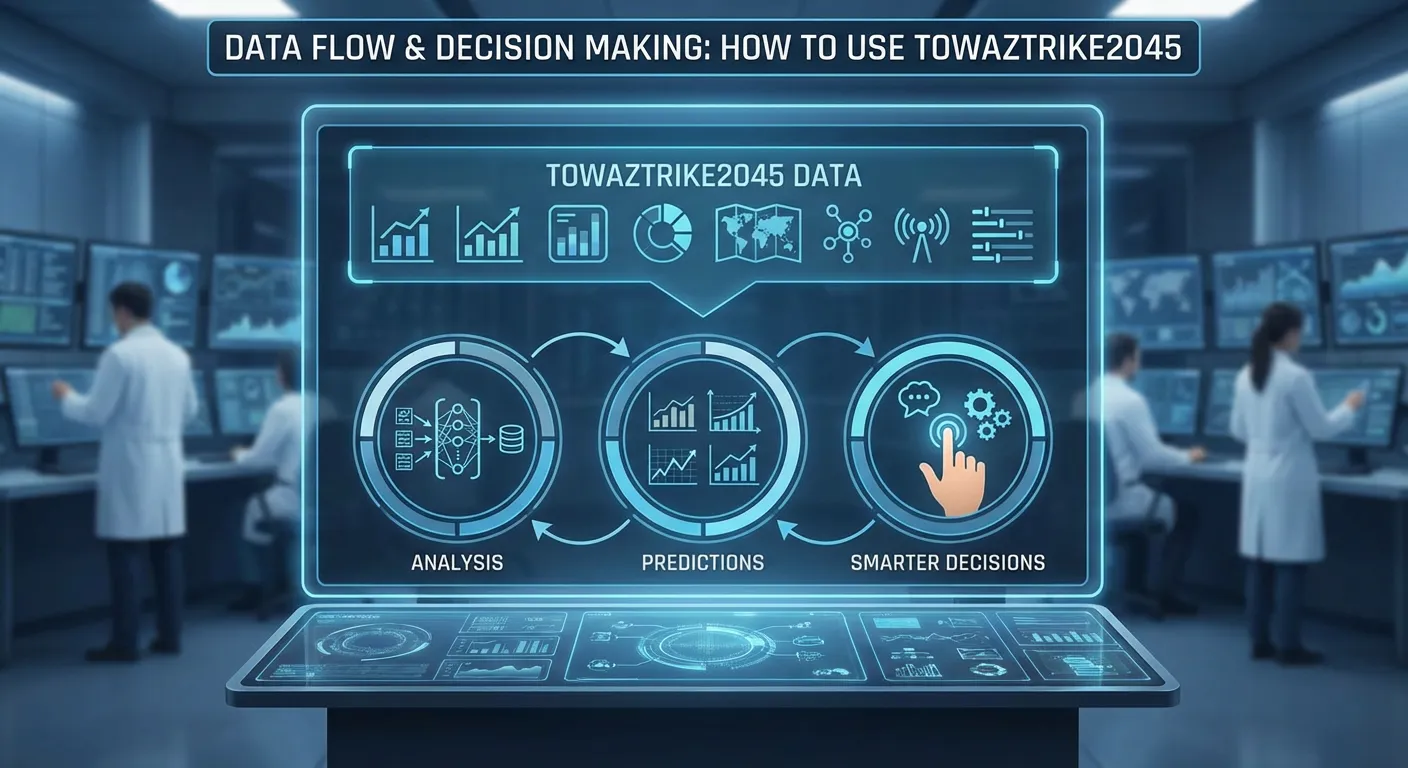
Understanding how to use Towaztrike2045 data is essential for organizations looking to turn raw structured datasets into actionable insights. Whether you are managing fleet operations, optimizing logistics, or monitoring system performance, the Towaztrike2045 data platform delivers a rich, structured dataset packed with timestamps, status indicators, and performance metrics that power data-driven decisions at scale.
This comprehensive guide walks you through every stage — from data ingestion and cleaning to advanced predictive modeling and compliance — so you can unlock the full potential of Towaztrike2045 data analysis.
1. Understanding the Towaztrike2045 Data Structure
Before performing any analysis, you must understand the data schema that Towaztrike2045 produces. The dataset is typically delivered in one of three formats:
- JSON data format — ideal for API integrations and real-time streaming via Kafka.
- CSV data export — suitable for spreadsheet tools and lightweight reporting.
- Parquet format — optimized for columnar storage and high-performance query execution in data warehouses like BigQuery and Snowflake.
Core Fields in the Dataset
| Field | Description |
|---|---|
record_id | Unique identifier per data entry |
timestamp | ISO 8601 date-time of the event |
status_indicator | Operational status code (active, idle, fault) |
performance_score | Normalized metric between 0–100 |
unit_id | Device or vehicle identifier |
geo_coordinates | Latitude/longitude for fleet tracking |
event_type | Category of the logged event |
Understanding this data schema is the foundation of any successful Towaztrike2045 data analysis workflow.
2. Data Ingestion and Pipeline Setup
Getting Towaztrike2045 data into your environment requires a robust data ingestion strategy. For real-time operations, Apache Kafka streaming is the preferred approach, enabling sub-second latency for system performance monitoring.
For batch workflows, tools like Apache Airflow orchestration allow you to schedule daily or hourly ETL jobs that pull data into your data warehouse (BigQuery or Snowflake) and apply dbt data transformation logic.
Recommended Ingestion Stack
Source: Towaztrike2045 API
   ↓
Kafka Streaming (real-time) / Airflow DAG (batch)
   ↓
Raw Layer: BigQuery / Snowflake
   ↓
Transformed Layer: dbt models
   ↓
Serving Layer: BI Tools / ML Models
This architecture ensures data reproducibility, full data lineage tracking, and auditability across the pipeline.
3. Data Cleaning and Preparation
Raw Towaztrike2045 data will contain imperfections. Robust data cleaning and preparation is non-negotiable before analysis.
Key Cleaning Steps
3.1 Handle Missing Values
Use missing values imputation strategies appropriate to the field type:
python
import pandas as pd

df = pd.read_parquet("towaztrike2045_raw.parquet")

# Forward-fill status indicators
df["status_indicator"] = df["status_indicator"].fillna(method="ffill")

# Mean imputation for performance scores
df["performance_score"] = df["performance_score"].fillna(df["performance_score"].mean())
3.2 Data Standardization
Normalize timestamps to UTC and standardize data metrics and timestamps to a consistent format:
python
df["timestamp"] = pd.to_datetime(df["timestamp"], utc=True)
df["performance_score"] = (df["performance_score"] - df["performance_score"].min()) / \
                          (df["performance_score"].max() - df["performance_score"].min())
3.3 Data Validation
Apply data quality validation rules to filter corrupt rows:
python
# Remove records with invalid performance scores
df = df[(df["performance_score"] >= 0) & (df["performance_score"] <= 100)]

# Validate status indicator values
valid_statuses = ["active", "idle", "fault", "maintenance"]
df = df[df["status_indicator"].isin(valid_statuses)]
4. Exploratory Data Analysis and Visualization
Once clean, your Towaztrike2045 dataset is ready for structured data insights through exploratory analysis.
4.1 Time Series Analysis
Towaztrike2045 data is inherently temporal. Use time series analysis to understand patterns and trends:
python
import matplotlib.pyplot as plt

daily_avg = df.groupby(df["timestamp"].dt.date)["performance_score"].mean()

plt.figure(figsize=(14, 5))
plt.plot(daily_avg.index, daily_avg.values, linewidth=1.5, color="#0066cc")
plt.title("Towaztrike2045 – Daily Average Performance Score")
plt.xlabel("Date")
plt.ylabel("Performance Score")
plt.grid(True, alpha=0.3)
plt.tight_layout()
plt.show()
4.2 Rolling Averages and Lag Features
For feature engineering, calculate rolling averages and lag features to capture momentum and seasonality:
python
df = df.sort_values("timestamp")

# 7-day rolling average
df["rolling_7d"] = df["performance_score"].rolling(window=7).mean()

# Lag features (1-day, 3-day)
df["lag_1d"] = df["performance_score"].shift(1)
df["lag_3d"] = df["performance_score"].shift(3)
4.3 Correlation Mapping
Use correlation mapping to identify relationships between variables:
python
import seaborn as sns

corr_matrix = df[["performance_score", "rolling_7d", "lag_1d", "lag_3d"]].corr()
sns.heatmap(corr_matrix, annot=True, cmap="coolwarm", fmt=".2f")
plt.title("Towaztrike2045 Feature Correlation Map")
4.4 Visualization Tools
For business dashboards, the top data visualization tools for Towaztrike2045 data include:
- Tableau data visualization — drag-and-drop dashboards for operational data reporting.
- Power BI dashboard — tight integration with Azure and Microsoft ecosystems.
- Python (Plotly/Matplotlib) — for custom, code-driven visual analytics.
5. Anomaly Detection
Anomaly detection is one of the most valuable use cases for Towaztrike2045 data in system performance monitoring and predictive maintenance data scenarios.
5.1 Machine Learning Anomaly Detection with Isolation Forest
The Isolation Forest algorithm is highly effective on high-dimensional operational data:
python
from sklearn.ensemble import IsolationForest

features = ["performance_score", "rolling_7d", "lag_1d"]
X = df[features].dropna()

model = IsolationForest(contamination=0.05, random_state=42)
df.loc[X.index, "anomaly_flag"] = model.fit_predict(X)

# -1 = anomaly, 1 = normal
anomalies = df[df["anomaly_flag"] == -1]
print(f"Detected {len(anomalies)} anomalies in Towaztrike2045 dataset")
5.2 Statistical Threshold Detection
For simpler data validation and SLA breach detection:
python
mean = df["performance_score"].mean()
std = df["performance_score"].std()

df["is_anomaly"] = (df["performance_score"] < mean - 3 * std) | \
                   (df["performance_score"] > mean + 3 * std)
6. Predictive Modeling
Predictive modeling using Towaztrike2045 data supports capacity planning, SLA monitoring, and predictive maintenance data strategies.
6.1 Time Series Forecasting with Prophet
Facebook’s Prophet model is well-suited for Towaztrike2045’s daily performance data:
python
from prophet import Prophet

prophet_df = df[["timestamp", "performance_score"]].rename(
    columns={"timestamp": "ds", "performance_score": "y"}
)

model = Prophet(yearly_seasonality=True, weekly_seasonality=True)
model.fit(prophet_df)

future = model.make_future_dataframe(periods=30)
forecast = model.predict(future)

model.plot(forecast)
6.2 SARIMA for Seasonal Patterns
SARIMA (Seasonal ARIMA) is ideal when Towaztrike2045 data exhibits strong seasonal cycles:
python
from statsmodels.tsa.statespace.sarimax import SARIMAX

sarima_model = SARIMAX(
    df["performance_score"],
    order=(1, 1, 1),
    seasonal_order=(1, 1, 1, 7)
)
result = sarima_model.fit(disp=False)
forecast = result.forecast(steps=30)
6.3 Linear Regression Forecasting
For rapid linear regression forecasting with multiple features:
python
from sklearn.linear_model import LinearRegression
from sklearn.model_selection import train_test_split

X = df[["rolling_7d", "lag_1d", "lag_3d"]].dropna()
y = df.loc[X.index, "performance_score"]

X_train, X_test, y_train, y_test = train_test_split(X, y, test_size=0.2)

lr = LinearRegression()
lr.fit(X_train, y_train)
print(f"R² Score: {lr.score(X_test, y_test):.4f}")
7. Operational Use Cases
7.1 Fleet Management Data
Towaztrike2045’s unit_id and geo_coordinates fields enable real-time fleet management data tracking — monitoring vehicle health, route efficiency, and maintenance schedules using historical data comparison and cohort analysis.
7.2 Logistics Data Optimization
Apply rolling averages and forecasting outputs to streamline dispatch timing, reduce idle time, and improve delivery SLAs through logistics data optimization.
7.3 Root Cause Analysis
When anomalies are flagged, use root cause analysis by drilling into correlated fields:
python
anomaly_window = anomalies[["timestamp", "unit_id", "status_indicator", "performance_score"]]
print(anomaly_window.sort_values("timestamp"))
8. Database and Query Optimization
8.1 SQL and NoSQL Strategies
- SQL database (PostgreSQL, BigQuery): Use for structured Towaztrike2045 reporting with complex joins.
- NoSQL database (MongoDB, DynamoDB): Use when ingesting semi-structured JSON data format at high velocity.
8.2 Data Partitioning and Columnar Storage
Optimize query performance through data partitioning by date and unit_id:
sql
-- BigQuery partitioned table
CREATE TABLE towaztrike2045.performance_data
PARTITION BY DATE(timestamp)
CLUSTER BY unit_id
AS SELECT * FROM towaztrike2045.raw_data;
Columnar storage (Parquet on GCS/S3) reduces scan costs by 60–80% for analytical workloads.
8.3 Query Optimization Tips
- Filter on partition columns (
timestamp) before non-partitioned ones. - Use materialized views for frequently-run aggregations.
- Apply dbt data transformation models to pre-aggregate daily summaries.
9. Data Governance and Compliance
9.1 Role-Based Access Control
Implement role-based access control (RBAC) to limit who can query raw Towaztrike2045 data containing PII data privacy fields:
Role Access Level Data Analyst Aggregated tables only Data Engineer Raw + transformed layers ML Engineer Feature tables + model outputs Admin Full access
9.2 GDPR Compliance and Data Retention
- Mask or pseudonymize PII fields (driver IDs, location data) per GDPR compliance requirements.
- Define a data retention policy — for example, retain raw data for 90 days, aggregated data for 3 years.
- Maintain a data catalog documenting every field, owner, and sensitivity classification.
9.3 Data Lineage
Track the full data lineage from source to dashboard using dbt’s lineage graph or tools like OpenLineage/Marquez to ensure data reproducibility and auditability.
10. R Programming for Towaztrike2045 Data Analysis
For teams preferring R programming data workflows:
r
library(tidyverse)
library(lubridate)
library(prophet)

# Load data
df <- read_csv("towaztrike2045_export.csv") %>%
  mutate(timestamp = ymd_hms(timestamp, tz = "UTC"))

# Rolling average
df <- df %>%
  arrange(timestamp) %>%
  mutate(rolling_7d = zoo::rollmean(performance_score, 7, fill = NA))

# Visualize
ggplot(df, aes(x = timestamp, y = performance_score)) +
  geom_line(color = "#0066cc", linewidth = 0.8) +
  geom_line(aes(y = rolling_7d), color = "#ff6600", linetype = "dashed") +
  labs(title = "Towaztrike2045 Performance Trend",
       x = "Date", y = "Performance Score") +
  theme_minimal()
11. Best Practices Summary
| Stage | Best Practice |
|---|---|
| Ingestion | Use Kafka for real-time; Airflow for batch |
| Storage | Parquet + columnar partitioning |
| Cleaning | Validate schema; impute missing values |
| Analysis | Apply rolling averages + lag features |
| Anomaly Detection | Isolation Forest + 3-sigma thresholds |
| Forecasting | Prophet for daily trends; SARIMA for seasonality |
| Governance | RBAC + GDPR masking + data catalog |
| Visualization | Power BI / Tableau for stakeholders |
Conclusion
Knowing how to use Towaztrike2045 data correctly transforms raw operational records into a powerful engine for data-driven decisions. From initial data ingestion and data cleaning and preparation, through time series analysis, anomaly detection, and predictive modeling, to final data governance and compliance — each step builds upon the last.
By implementing the SQL/NoSQL strategies, Python and R workflows, Kafka and Airflow pipelines, and BI dashboards described in this guide, your team will be fully equipped to extract maximum value from structured Towaztrike2045 data — whether for fleet management data, logistics data optimization, predictive maintenance data, or SLA monitoring at enterprise scale.

The modern business runs on documents — contracts, invoices, reports, proposals, approvals — and the organizations that manage those documents efficiently hold a decisive competitive advantage over those still drowning in email attachments, version confusion, and paper-based bottlenecks. Trucofax is the document management platform built to eliminate that friction entirely: a comprehensive, cloud-powered solution that unifies cloud storage, e-signature, real-time collaboration, and intelligent workflow automation into a single, coherent system designed for the way businesses actually work.
Whether you are a growing startup navigating your first serious contract management needs, an enterprise team managing thousands of documents across multiple departments, or a remote-first organization demanding remote document access without security compromise, Trucofax delivers the centralized information platform that transforms document chaos into operational clarity.
Read More: Best API Search Company’s Homepage – API Discovery Platform for Developers
What Is Trucofax?
Trucofax is a business productivity tool built on the principle that document management should be invisible — a frictionless foundation beneath your work rather than a constant obstacle to it. The platform integrates every dimension of the document management lifecycle into a unified interface: creation and customizable templates, secure cloud document management storage, electronic signature with full legal compliance, real-time collaboration, and workflow automation that eliminates the approval bottlenecks and email chains that slow organizations down.
The digital transformation promise of Trucofax is not abstract. It is the concrete replacement of paperwork management overhead with business efficiency — hours recovered, errors eliminated, and the centralized knowledge base clarity that comes from knowing exactly where every document lives, who has seen it, and what its current status is.
Cloud Storage and Document Management: The Secure Foundation
At the core of Trucofax is a cloud document management infrastructure engineered for both accessibility and security — the combination that organizations most frequently find in tension with each other and that Trucofax resolves through deliberate architectural design.
Secure Document Storage and Data Encryption
Secure document storage in Trucofax is built on data encryption protocols that protect documents both in transit and at rest. Every file stored on the Trucofax platform is encrypted using industry-standard cryptographic protocols that render sensitive document protection meaningful rather than performative — unauthorized access prevention that works at the infrastructure level, not just the interface level.
Permission based access controls allow administrators to define precisely who can view, edit, share, or delete every document and folder in the system. Access controls operate at both the user and group level, making Trucofax adaptable to organizational structures ranging from flat startup teams to complex enterprise hierarchies with layered approval authority.
Folder Organization, File Format Support, and Document Retrieval
Folder organization in Trucofax mirrors the intuitive structures that teams already use, reducing the learning curve for new users while providing the metadata and tagging infrastructure that makes document retrieval genuinely fast. Search across the full document library — by filename, content, date, author, template type, or custom tag — returns accurate results in seconds regardless of library size.
File format support across Trucofax encompasses the full range of business document types — PDFs, Word documents, spreadsheets, presentations, images, and more — ensuring that the platform’s file management capabilities accommodate existing workflows without format conversion overhead.
Version control tracks every change made to every document, creating a complete audit history that allows teams to review prior versions, understand what changed and when, and restore previous states when necessary. This change tracking capability is particularly valuable for contract management and invoice template workflows where document evolution is legally and operationally significant.
E-Signature: Legally Binding, Compliant, and Frictionless
The e-signature capability within Trucofax addresses one of the most persistent friction points in business document workflows — the gap between a completed document and an executed agreement that can only be closed by a legally binding signature.
Electronic Signature Compliance and Legal Standing
E-signature compliance in Trucofax is built to meet the legal standards that govern electronic signature validity across major jurisdictions. The digital signature platform infrastructure produces signatures that satisfy the evidentiary and authentication requirements of online document signing regulations, giving organizations the confidence to replace wet ink signatures with Trucofax e-signatures across their full contract and agreement portfolio.
Every legally binding signature executed through Trucofax is accompanied by a comprehensive audit trail — timestamp, IP address, authentication method, document fingerprint — that provides the evidentiary foundation needed for enforcement in the event of a dispute. This e-signature compliance documentation is generated and stored automatically, requiring no additional effort from the signing parties.
Signing Workflow and Notification System
The Trucofax signing workflow is designed to minimize the time between document completion and executed agreement. Documents are prepared for signature with field placement tools that guide signatories to the exact locations requiring their input, reducing signature errors and the re-send cycles they generate.
The integrated notification system alerts all parties when documents are ready for signature, when signatures have been applied, and when the fully executed document is available for download and filing. Approval bottleneck reduction through automated reminder sequences ensures that signature processes complete on schedule without manual follow-up overhead.
Customizable Templates: Consistency, Branding, and Speed
Customizable templates are one of Trucofax‘s most immediately productivity-enhancing features — the capability that allows organizations to build a library of reusable document structures that guarantee brand consistency, eliminate creation-from-scratch overhead, and ensure that every document going out of the organization reflects current standards.
Business Document Templates for Every Need
The Trucofax template library supports the full range of business document types that organizations produce repeatedly. Invoice template designs with automatic field population reduce accounts receivable document creation to seconds. Report template structures ensure consistent formatting and section organization across teams and departments. Contract management templates pre-populate standard terms and conditions while preserving the flexibility to customize deal-specific provisions.
Brand consistency across all templates is enforced through logo integration and color scheme customization controls that apply organizational visual standards to every document produced through the platform. The result is a document portfolio that looks and feels like it comes from a single, coherent organization — regardless of how many different team members produced individual documents.
Template Sharing and Access Management
Templates in Trucofax are shared across the organization through the same permission based access framework that governs document access — ensuring that the right teams have access to the right templates while preventing unauthorized modification of approved master versions. Template updates propagate automatically to all users with access, eliminating the version fragmentation that plagues organizations managing templates through shared drives or email distribution.
Real-Time Collaboration: Working Together Without the Friction
Real-time collaboration is the feature dimension of Trucofax that most directly addresses the productivity cost of traditional document workflows — the sequential review processes, the conflicting edits, the email threads that grow longer than the documents they discuss.
Simultaneous Document Editing and Annotation
Simultaneous document editing in Trucofax allows multiple team members to work on the same document concurrently, with each user’s changes visible to all other active editors in real time. Document annotation tools enable reviewers to add comments, questions, and suggestions directly on document content — maintaining the conversational context of review feedback within the document itself rather than in separate email threads.
Real-time updates ensure that every collaborator is always working from the current state of the document — no more “I was editing the wrong version” frustrations, no more conflicting change sets that require manual reconciliation. Change tracking records who made each modification and when, providing both accountability and the ability to review the evolution of document content through successive collaborative editing sessions.
Project Collaboration and Team Workflow
Project collaboration tool capabilities in Trucofax extend beyond individual document editing to encompass the full project document ecosystem — the collection of contracts, briefs, reports, approvals, and reference documents that a project generates over its lifecycle. Folder organization structures allow project teams to maintain organized, accessible document libraries that grow with the project without becoming unmanageable.
Email reduction workflow — one of the most measurable business efficiency gains that Trucofax delivers — results directly from moving document collaboration, review, and approval into the platform rather than email. When reviewers can annotate directly on documents, when approval workflows route automatically rather than manually, and when the notification system replaces individual follow-up emails, the email volume associated with document management drops dramatically.
Read More: Solo ET: The Intelligent Productivity Platform Built for Individual Excellence
Workflow Automation: Intelligent Document Processing
Workflow automation within Trucofax transforms document management from a reactive, manual process into a proactive, systematic one — using intelligent document processing capabilities to handle routine document workflows without human intervention at each step.
Document Approval Workflow and Routing
Document approval workflow automation in Trucofax allows organizations to define the routing logic that governs how documents move through review and approval sequences. A contract above a certain value threshold routes automatically to senior legal review. An invoice from a new vendor triggers a verification workflow before payment authorization. An employee expense report above policy limits routes to manager approval before processing.
Approval bottleneck reduction through this automated routing eliminates the manual follow-up and escalation overhead that makes approval processes slow and inconsistent. Every document in an active workflow has a defined current owner, a clear next step, and an automatic escalation path if deadlines are missed — without any human coordinator managing the process manually.
Software Integration and Workflow Connectivity
Workflow integration and software integration capabilities in Trucofax connect the platform’s document management infrastructure with the other business systems that organizations depend on. CRM integration surfaces relevant documents alongside customer records. Accounting software integration connects invoice template workflows with payment systems. Communication platform integration delivers notification system alerts through the channels that teams already monitor.
This workflow integration architecture makes Trucofax not a standalone document silo but a connected component of the broader organizational technology ecosystem — ensuring that document management workflows are informed by and inform the other systems that shape business operations.
AI Document Processing and Intelligent Content Management
AI document processing capabilities within Trucofax represent the platform’s most forward-looking productivity dimension — the use of advanced algorithms to automate the cognitive aspects of document management that have historically required human attention.
Content Curation and Data Aggregation
Content curation features powered by AI document processing analyze the document library to identify related documents, surface relevant precedents during contract drafting, and suggest template selections based on the document being created. This intelligent assistance reduces the research overhead associated with document creation and improves the consistency of organizational document standards.
Data aggregation across the document library enables reporting and analytics capabilities that transform the document archive from a passive storage repository into an active organizational intelligence resource. Document activity patterns, approval cycle times, signature completion rates, and workflow bottleneck identification are all visible through the Trucofax analytics layer.
Centralized Knowledge Base and Information Accuracy
The centralized knowledge base function of Trucofax addresses one of the most persistent organizational information management challenges — the fragmentation of institutional knowledge across multiple storage systems, personal drives, and email archives that makes reliable document retrieval impossible and information accuracy difficult to guarantee.
Reliable data sources within Trucofax are maintained through version control and the change tracking audit trail — every document has a clear, accessible history, a definitive current version, and the metadata context needed to evaluate its relevance and authority. Misinformation reduction through this centralized, version-controlled architecture ensures that teams are making decisions based on current, accurate documents rather than outdated versions retrieved from personal archives.
Real time data availability — the ability to access current document states from any device with internet connectivity — makes remote document access genuinely functional rather than aspirational. For distributed teams and remote-first organizations, this real-time updates capability is not a convenience feature but an operational necessity.
Security Architecture: Protecting What Matters Most
The security architecture of Trucofax reflects a foundational commitment to sensitive document protection that recognizes the organizational risk associated with document security failures — regulatory penalties, litigation exposure, competitive harm, and reputational damage that can result from unauthorized access to business-critical documents.
Data encryption at every layer of the platform architecture ensures that documents are protected from interception during transmission and unauthorized access during storage. Unauthorized access prevention through multi-factor authentication, session management, and anomalous access detection provides layered defense against both external threat actors and insider risk.
Permission based access granularity allows organizations to implement least-privilege access principles — ensuring that every user has access to exactly the documents their role requires and no more. Access review workflows enable periodic audits of permission structures to identify and remediate access that has become inappropriate as organizational roles evolve.
Digital Transformation: The Business Case for Trucofax
The digital transformation value proposition of Trucofax is measurable across multiple dimensions of organizational performance.
Paperless office adoption through Trucofax reduces the direct costs associated with paper-based document management — printing, storage, retrieval, and disposal — while eliminating the indirect costs of manual document processing: the time spent filing, searching, routing, and re-creating documents that the current system cannot reliably locate.
Business efficiency gains from workflow automation and approval bottleneck reduction translate directly to cycle time compression across the document-dependent processes that drive revenue and manage risk. Contracts executed faster mean revenue recognized sooner. Invoices processed more efficiently mean better cash flow management. Compliance documentation maintained more accurately means reduced regulatory risk exposure.
User friendly interface design ensures that the business efficiency gains of Trucofax adoption are accessible to the full organizational user base — not just technically sophisticated early adopters but the entire workforce whose document management habits the platform needs to change to deliver its efficiency promise.
Why Trucofax Is the Right Choice for Your Organization
The document management platform market is crowded with solutions that solve parts of the problem well while leaving gaps that force organizations into multi-platform complexity. Trucofax addresses this fragmentation by integrating the full document management lifecycle — storage, creation, collaboration, signature, and automation — into a platform designed around the actual workflow logic of business document management rather than the feature-by-feature assembly of capabilities.
For growing businesses seeking a business productivity tool that scales with their needs, Trucofax provides the centralized information platform foundation that supports expansion without the technical debt of replacing inadequate point solutions. For enterprise organizations seeking paperless office transformation, Trucofax delivers the security, compliance, and integration architecture that enterprise deployment demands.
For every organization that has ever lost time searching for a document, waited too long for an approval, or sent an outdated contract to a client, Trucofax is the answer — the document management platform that turns document management from an organizational liability into an organizational asset.

The best API search company’s homepage, you’re likely looking for more than just a search bar. You want a powerful API discovery platform, advanced developer tools, seamless API integration, and a transparent ecosystem that helps you find, test, and integrate APIs faster.
In today’s developer-driven economy, choosing the right application programming interface (API) search platform can significantly impact productivity, scalability, and innovation.
This guide explains what makes an API search homepage truly the best — and how it compares to platforms like RapidAPI, Algolia, SerpApi, Brave Search API, ScrapingBee, Elastic, Crunchbase, Clearbit, and the Postman API Network.
What Makes the Best API Search Company’s Homepage?
A high-performing API search homepage is more than a directory — it’s a unified API hub designed for speed, discoverability, and integration.
1. Powerful API Marketplace & Catalog
The best API search company offers:
- Structured API categories
- Advanced API filtering
- Smart search functionality
- AI-powered API discovery
- Clear API ratings and reviews
- Security badges and trust signals
It acts as a centralized API marketplace and API catalog, helping developers quickly find:
- Web scraping APIs
- Search engine APIs
- SERP APIs
- Payment processing APIs
- Inventory management APIs
- Patient data APIs
- Fintech APIs
- Ecommerce search APIs
- SaaS search solutions
- Enterprise APIs
2. Seamless Developer Experience
A great API discovery platform focuses heavily on developer experience.
Key features include:
- Interactive API documentation
- Live API testing with test console
- Sandbox environment
- Code snippets
- Curl examples
- Unified API key generation
- SDK downloads
Support for:
- REST API
- GraphQL
- SOAP protocol
- Python integration
- JavaScript SDK
- Java SDK
This improves developer productivity and speeds up code integration.
3. Real-Time Data & Intelligence Capabilities
The best API search company’s homepage highlights APIs that provide:
- Real-time data extraction
- Company homepage data
- Competitive intelligence
- Pricing monitoring
- Product tracking
- Market research
These capabilities are critical for startups, SaaS businesses, and enterprises building scalable API-powered systems.
4. Performance Transparency & Reliability
Trust is essential in the API ecosystem.
Top platforms display:
- API performance metrics
- Uptime statistics
- Response speed benchmarks
- HTTPS encryption
- API authentication methods
- Access control settings
- Usage limits
- Performance transparency dashboards
This ensures API reliability and helps developers choose scalable API solutions confidently.
5. Built-In API Analytics & Monetization
Modern API hubs offer:
- API analytics dashboard
- Transparent pricing
- Flexible API pricing model
- Pay-as-you-go options
- Subscription API plans
- Payment processing integration
Clear pricing structures increase adoption and reduce friction in the onboarding process.
6. Advanced Web Scraping & Automation Capabilities
Many APIs listed on top platforms specialize in:
- Anti-bot systems handling
- JavaScript rendering
- Proxy rotation
- Browser automation
- IP blocking avoidance
- CAPTCHA challenge management
- Request scheduling
These features are especially important for search engine APIs and SERP APIs that require large-scale data extraction.
7. AI-Powered API Discovery & LLM Integration
The next generation of API search platforms integrates:
- AI-powered API discovery
- LLM tools
- AI agents
- Knowledge retrieval systems
- Unified API platforms
This enables intelligent API recommendations based on project needs, improving API discoverability across the ecosystem.
8. Modern Homepage Design & UX
The best API search company’s homepage is:
- Mobile-friendly
- Dark mode enabled
- Fast-loading
- SEO optimized
- Built for scalable enterprise API usage
- Supported by community forums
A modern design enhances onboarding and reduces friction for developers exploring the API hub.
Comparison With Popular API Platforms
While platforms like:
- RapidAPI focus on a large API marketplace
- Algolia specializes in powerful search functionality
- SerpApi provides SERP API solutions
- Brave Search API offers search engine APIs
- ScrapingBee supports scraping with proxy rotation
- Elastic powers enterprise search
- Postman API Network enables API collaboration
The best API search company’s homepage combines all of these strengths into a unified experience.
Why API Discoverability Matters
Strong API discoverability improves:
- Startup API tools exposure
- API innovation
- Developer onboarding
- API ecosystem growth
- SaaS and enterprise scalability
With structured API categories, intelligent filtering, and unified authentication, developers can move from discovery to deployment in minutes.
How to Identify the Best API Search Homepage
When evaluating a platform, check for:
✅ Transparent API documentation quality
✅ Live API testing console
✅ Unified API key system
✅ Clear API pricing model
✅ Real uptime statistics
✅ Enterprise-grade security
✅ Scalable API architecture
✅ Strong community forums
✅ API innovation roadmap
Final Thoughts
The best API search company’s homepage is not just a directory — it’s a complete API discovery platform designed for developer productivity, performance transparency, and seamless integration.
From REST API and GraphQL support to AI-powered API discovery, unified API keys, real-time data extraction, and scalable enterprise APIs — the right platform empowers developers to build faster and innovate smarter.
If your goal is competitive intelligence, ecommerce search, fintech integration, healthcare interoperability, or SaaS search optimization, choosing the right API search homepage will define your success.
Technology
Spaietacle: Meaning, Definition, Real-World Uses, and Why It’s Reshaping Immersive Entertainment

Something unprecedented is happening at the crossroads of space, technology, and storytelling. The word Spaietacle is surfacing across creative industries, cultural conversations, and digital media circles — and for good reason. A fusion of “space” and “spectacle,” Spaietacle captures a concept that has been building for years but finally has a name: the transformation of physical and digital environments into fully immersive, participatory experiences. Whether you’re an event creator, a brand marketer, an educator, or simply someone who craves experiences that go beyond the ordinary, understanding Spaietacle in 2026 is essential. This guide covers everything — its meaning, origins, real-world applications, technology, benefits, challenges, and what the future holds.
What Is Spaietacle? Definition and Etymology
At its simplest, Spaietacle is an immersive experience where space itself becomes the primary medium of storytelling, emotion, and interaction. Unlike traditional entertainment where audiences sit and observe, a spaietacle places participants inside the narrative — they move, react, and sometimes even shape the outcome.
The word carries a deliberate linguistic architecture. It blends the Latin root spatium (space) with spectaculum (show or spectacle). The result is something more conceptually loaded than either word alone: a space-show, or more precisely, an intentionally designed environment where architecture, light, sound, performance, and digital layers converge so that a visitor’s presence and movement unfold meaning.
A spaietacle gives practitioners a concise label for an approach that has been growing across festivals, museums, urban design, education, therapy, and branding — naming it makes it easier to discuss best practices, research, and ethics.
Some writers and researchers also expand the etymological scope further. Spaietacle combines three core ideas: Space (immersive environments, both physical and virtual), AI (adaptive intelligence that personalizes experiences), and Spectacle (visual and emotional drama that commands attention).
The Origins of Spaietacle: From Ancient Rituals to Digital Spaces
Spaietacle did not appear from nowhere. It is the latest expression of an ancient human impulse to make space meaningful.
Human cultures have always used space for storytelling — seasonal rituals, processions, sacred groves, and communal festivals. In those moments, landscape and movement carried meaning, not unlike today’s spaietacles.
As theater formalized over centuries, spaces became more structured — stages, amphitheaters, prosceniums. But throughout the 20th and 21st centuries, artists and designers began pushing back. Site-specific performances, immersive theater companies like Punchdrunk, and participatory art movements reclaimed space as an active narrative device rather than a passive container.
In the last two decades, projection mapping, affordable sensors, AR toolkits, and spatial audio made it possible to add layered, reactive media to almost any environment — democratizing what was once only achievable for major studios and theme parks. The result was the conditions necessary for spaietacle to emerge as a defined concept.
How Spaietacle Works: The Technology Behind Immersive Experiences
A spaietacle is not defined by any single technology. It is defined by the intentional combination of technologies in service of a spatial, emotional experience. The most common tools include the following.
Augmented Reality (AR) overlays digital content onto the real world, allowing participants to see additional layers of information, animation, or story without leaving the physical space. AR glasses and smartphone-based AR are two of the most accessible entry points.
Virtual Reality (VR) creates fully digital environments where participants can explore entirely constructed worlds. When combined with real physical spaces — for example, a VR experience staged in an empty warehouse — VR becomes a powerful spaietacle tool.
Projection Mapping transforms irregular surfaces — buildings, trees, sculptures — into dynamic canvases. Entire cityscapes have been reimagined using projection mapping in festivals across Europe and Asia.
Spatial Audio uses three-dimensional sound design to locate sounds precisely in space, making participants feel surrounded by and part of the sonic environment.
Artificial Intelligence is increasingly central to spaietacle design. AI can adapt experiences to individual users, personalizing interactions and enhancing engagement in real time — so two visitors walking through the same space may have meaningfully different encounters based on their behavior, mood, or choices.
Haptic Wearables, Biometrics, and Scent Integration round out the sensory toolkit, with emerging systems capable of triggering touch sensations, reading physiological signals, and even releasing scents to reinforce narrative moments.
Real-World Applications of Spaietacle Across Industries
One of the most compelling aspects of spaietacle as a concept is its radical versatility. It is not confined to one sector or format.
Entertainment and Live Events
Spaietacle concerts might feature holographic performers surrounded by augmented lights and scenery. Theater shows can be reinvented where audience members physically walk through different acts of the play. Virtual escape rooms, interactive movie experiences, and immersive video games are all part of the Spaietacle revolution.
Immersive spaietacle theater experiences now sell out faster than traditional Broadway shows because people crave the thrill of being inside the story.
Museums and Cultural Institutions
Imagine studying anatomy inside a 3D model of the human body or learning history by standing in the middle of the Roman Colosseum as gladiators prepare for battle. Spaietacle turns abstract concepts into vivid, memorable experiences, making learning more engaging and effective.
Large-scale immersive art exhibitions — such as those centered on Van Gogh or Claude Monet — represent early mainstream spaietacle applications, surrounding visitors with moving visuals, light, and sound rather than asking them to observe art from a distance.
Retail and Brand Marketing
In the experience economy, brands must do more than advertise — they must engage. Spaietacle offers a powerful platform for immersive storytelling that connects emotionally with audiences.
Rather than browsing products on shelves, shoppers in spaietacle retail environments can walk through immersive brand narratives, see how furniture looks in their own home through AR, or experience the lifestyle surrounding a fashion brand in an interactive virtual environment.
Education and Training
Educators are embracing spaietacle to transform how complex or abstract subjects are taught. When a student can walk through the human circulatory system or stand inside a historical battle, retention improves dramatically. Embodied experiences produce stronger memory encoding than passive reading or lecture-based instruction.
Healthcare and Therapy
Immersive environments can help reduce anxiety during medical procedures, aid in physical rehabilitation through gamified exercises, or treat mental health issues through structured therapeutic immersion — an area of growing clinical research.
Tourism and Travel
Virtual walking tours through ancient ruins, interactive museum exhibits, or immersive cultural experiences let people travel across time and space from anywhere in the world. Historical locations can be reconstructed in their prime, while inaccessible areas — like deep-sea or space environments — can be explored safely.
The Experience Economy: Why Spaietacle Is Rising Now
The timing of spaietacle’s emergence is not accidental. It is the product of a specific cultural and economic moment.
We live in the experience economy: people spend more on memorable moments than on things. Institutions, brands, educators, and artists are racing to create experiences that are shareable, memorable, and emotionally resonant.
After years of digital overload, especially post-pandemic, people want real connection — not just with others, but with spaces, stories, and emotions. Spaietacle satisfies this need by combining technology, environment, and storytelling in unforgettable ways.
The immersive technology market was estimated at roughly $40.9 billion in 2024 and is projected to grow strongly through the late 2020s, reflecting rapid adoption of AR and VR tools that underpin many spaietacle experiences. This market scale makes it financially viable for brands and creators to build spaietacles at scale, and falling hardware costs are broadening access further each year.
Spaietacle vs. Traditional Entertainment: Key Differences
| Dimension | Traditional Entertainment | Spaietacle |
|---|---|---|
| Audience Role | Passive observer | Active participant |
| Environment | Fixed stage or screen | Immersive, responsive space |
| Technology | Limited or conventional | AR, VR, AI, spatial audio, haptics |
| Personalization | Uniform for all viewers | Adaptive to individual behavior |
| Emotional Engagement | Primarily visual/auditory | Multi-sensory, embodied |
| Memorability | Moderate | High — experiential memory encoding |
| Scalability | Physical attendance cap | Hybrid: physical + virtual audiences |
The Emotional Power of Spaietacle: Why It Works
What gives spaietacle its unusual emotional force is a well-documented psychological principle: embodied experience produces richer, more durable memories than passive observation.
Embodied experiences produce stronger memory encoding than passive learning. Spaietacles convert abstract facts into lived spatial metaphors that learners inhabit.
Every element works toward a cohesive story. Rather than random visual effects, Spaietacle environments are carefully choreographed to guide emotional journeys.
When someone becomes part of a narrative — when the environment responds to their presence, when their choices alter outcomes — the cognitive and emotional investment rises significantly. This is why spaietacle is increasingly valuable not just in entertainment but in therapy, education, and civic engagement.
Challenges and Ethical Considerations
Despite its promise, spaietacle is not without real challenges that creators and institutions must take seriously.
Accessibility is perhaps the most significant concern. Not everyone can engage equally with technology-driven environments — whether due to physical disability, sensory sensitivities, or economic barriers to entry. Responsible spaietacle design must prioritize inclusion from the outset, not as an afterthought.
Privacy presents another dimension of risk. Sensors and wearables can track personal data, including movement patterns, biometric signals, and behavioral choices. Transparent data practices and meaningful consent mechanisms are non-negotiable.
Sensory Overload is a real design risk. Too much sensory input can overwhelm users, particularly those with sensory processing differences. The most effective spaietacle designs know when to pull back and let space breathe.
Cultural Sensitivity is essential when spaietacle engages historical or sacred spaces. The transformation of a site with deep cultural meaning into an entertainment platform must be handled with genuine community consultation and respect.
Substance vs. Spectacle is the central creative tension. Designers must balance spectacle with substance. Without thoughtful storytelling, immersive environments risk becoming visually impressive but emotionally shallow.
Pros and Cons of Spaietacle Experiences
Pros: Spaietacle creates deeply memorable, emotionally resonant experiences that passive media cannot replicate. It enables personalization at scale through AI adaptation. It opens new commercial channels for brands, educators, and cultural institutions. It supports therapeutic and rehabilitation applications with growing clinical evidence. It bridges physical and virtual audiences in hybrid formats, expanding reach globally.
Cons: High-quality spaietacle production requires significant technical investment and interdisciplinary expertise. Accessibility remains a barrier for many audiences, particularly those with disabilities or limited economic means. Privacy and data collection risks require careful governance. There is a genuine risk of prioritizing visual spectacle over meaningful storytelling. Environmental impact from energy-intensive tech installations must be considered in sustainable design.
The Future of Spaietacle: What 2026 and Beyond Looks Like
In 2026 the hardware has shrunk, the software has learned your preferences, and 5G (and now 6G trials) make lag a thing of the past. Museums are rolling out Spaietacle tours where you walk through ancient Rome while your guide is a holographic figure who answers your questions. Brands are hosting hybrid events where VIPs in Tokyo and fans in Texas share the same virtual stage.
Looking further ahead, the trajectory points toward experiences that are more personal, portable, and purposeful. The next generation of spaietacle will likely be characterized by environments that adapt to user mood and biofeedback, pop-up spaietacle installations for classrooms and community spaces, deeper integration of haptic wearables that will cost a fraction of today’s professional hardware, and a growing emphasis on ethical design — inclusion, accessibility, and emotional well-being at the center of the experience.
It will be less about giant theme parks and more about intimate, meaningful experiences that change how people feel, think, and connect.
For creators and organizations exploring immersive experience design, resources like the XR Association and Immersive Design Summit offer current industry research and community connections.
Key Takeaways
- Spaietacle blends “space” and “spectacle” to describe immersive, interactive experiences where the environment itself is the storytelling medium — not just a container for it.
- It draws on AR, VR, AI, spatial audio, projection mapping, and haptics to transform physical and digital spaces into participatory environments.
- Real-world applications span entertainment, education, retail, healthcare, tourism, and brand marketing, making it one of the most versatile concepts in the experience economy.
- The immersive technology market supporting spaietacle was valued at approximately $40.9 billion in 2024 and is growing rapidly — signaling strong commercial momentum.
- Responsible spaietacle design must prioritize accessibility, data privacy, cultural sensitivity, and emotional depth over pure visual spectacle to deliver lasting value.
Frequently Asked Questions About Spaietacle
What does Spaietacle mean? Spaietacle combines “space” and “spectacle” to describe immersive, interactive experiences where environments — physical or digital — become active storytelling mediums that participants move through and shape.
Where did the word Spaietacle come from? It blends the Latin roots spatium (space) and spectaculum (show or spectacle), emerging from creative and technology communities to name a growing category of immersive, participatory design.
How is Spaietacle different from VR? VR creates entirely digital environments for solo or small-group use. Spaietacle is broader — it can include VR but also AR, projection mapping, live performance, spatial audio, and physical space design, often involving live human interaction.
What industries use Spaietacle? Entertainment, education, retail, healthcare, tourism, brand marketing, and urban design are all actively applying spaietacle concepts to create more engaging, memorable experiences.
Is Spaietacle expensive to create? High-end spaietacle installations can require significant investment in technology, design, and production. However, modular and low-tech spaietacle experiences are increasingly accessible as hardware costs fall and open-source AR tools mature.
What makes Spaietacle emotionally powerful? Embodied experiences produce stronger memory encoding than passive observation. When participants move through a story and their choices influence outcomes, emotional investment and lasting recall increase significantly.
Can Spaietacle be used in education? Yes. Immersive learning environments allow students to inhabit concepts rather than read about them — making spaietacle particularly effective for subjects like history, science, medicine, and cultural studies.
What are the main risks of Spaietacle? Key concerns include accessibility barriers, data privacy from sensor-based tracking, sensory overload for sensitive users, cultural insensitivity in historically significant spaces, and the risk of prioritizing spectacle over meaningful content.
Is Spaietacle sustainable? It can be, with intentional design choices — prioritizing energy efficiency, reusable materials, and low-impact technologies. Sustainability is increasingly a design requirement in the field.
Will Spaietacle become mainstream? As AR glasses, haptic wearables, and AI systems become more affordable and widely adopted, spaietacle experiences are likely to expand from large-scale installations into everyday spaces like classrooms, offices, and public squares.
Spaietacle represents one of the most significant conceptual shifts in how humans design and inhabit shared experiences. By giving a name to the convergence of space, technology, and storytelling, it provides creators, brands, educators, and communities with a framework for building encounters that don’t just inform or entertain — they transform. In 2026, as immersive technology matures and cultural demand for meaningful shared moments grows, spaietacle is no longer a niche experiment. It is the leading edge of how experience itself will be designed.


Otelia Cox: Biography, Marriage, Family & Life of Tony Cox’s Wife
Otelia Cox is a name that carries deep meaning in the world of celebrity marriages. Best known as the wife...


Streameast Soccer: Watch Free Live Football Streams Online in 2025
Streameast soccer has become one of the most popular search terms among football fans who want to watch live matches...


Delta Flight DL275 Diverted to LAX: What Really Happened and Why
Delta Flight DL275 diverted to LAX after pilots detected a critical technical issue during a long-haul international flight, prompting an...


10 Best Affiliate Programs for Consistent Online Income
Introduction: Why Affiliate Marketing Is Still One of the Best Online Income Models In a world overflowing with “get rich...


Detroit Tigers vs Seattle Mariners Match Player Stats [5 Oct, 2025]
The American League Division Series between the Detroit Tigers and Seattle Mariners delivered one of the most compelling postseason baseball...

How to Use Towaztrike2045 Data for Analysis, Predictions & Smarter Decisions
Understanding how to use Towaztrike2045 data is essential for organizations looking to turn raw structured datasets into actionable insights. Whether...


Trucofax: The All-in-One Document Management Platform for the Modern Business
The modern business runs on documents — contracts, invoices, reports, proposals, approvals — and the organizations that manage those documents...


Pappedeckel: The Complete Guide to Germany’s Beloved Cardboard Lid and Traditional Cake
Few words in the German language carry as much quiet cultural weight as Pappedeckel. Literally translating to “cardboard lid” —...


Solo ET: The Intelligent Productivity Platform Built for Individual Excellence
In an era defined by constant connectivity, collectivism pressure, and the relentless noise of group dynamics, a quiet but powerful...


Best API Search Company’s Homepage – API Discovery Platform for Developers
The best API search company’s homepage, you’re likely looking for more than just a search bar. You want a powerful...
-

 Education2 months ago
Detailed analysis: internal+complaints+committee+report+2014-2020+central+university+of+kashmir
-

 Lifestyle2 months ago
Milyom Explained: Meaning, Culture & Impact on Modern Life
-

 Social Media2 months ago
GlarklyHub: Secure Social Networking & Digital Platform
-

 Entertainment2 months ago
Animeidhen: The Next-Generation Anime Hub Redefining Digital Animation
-

 Lifestyle2 months ago
Unveiling Monika Leveski: Creativity, Vision, and Influence in the Modern Art World
-

 Latest News2 months ago
2026 Volkswagen Karmann Ghia Full Review: Classic Beauty, Modern EV
-

 Education2 months ago
abcdefghijklmnopqrstuvwxyz – Meaning, Uses, Examples & Complete Guide
-

 Education2 months ago
Edivawer: AI-Powered Personalized Learning Platform