Uptip Media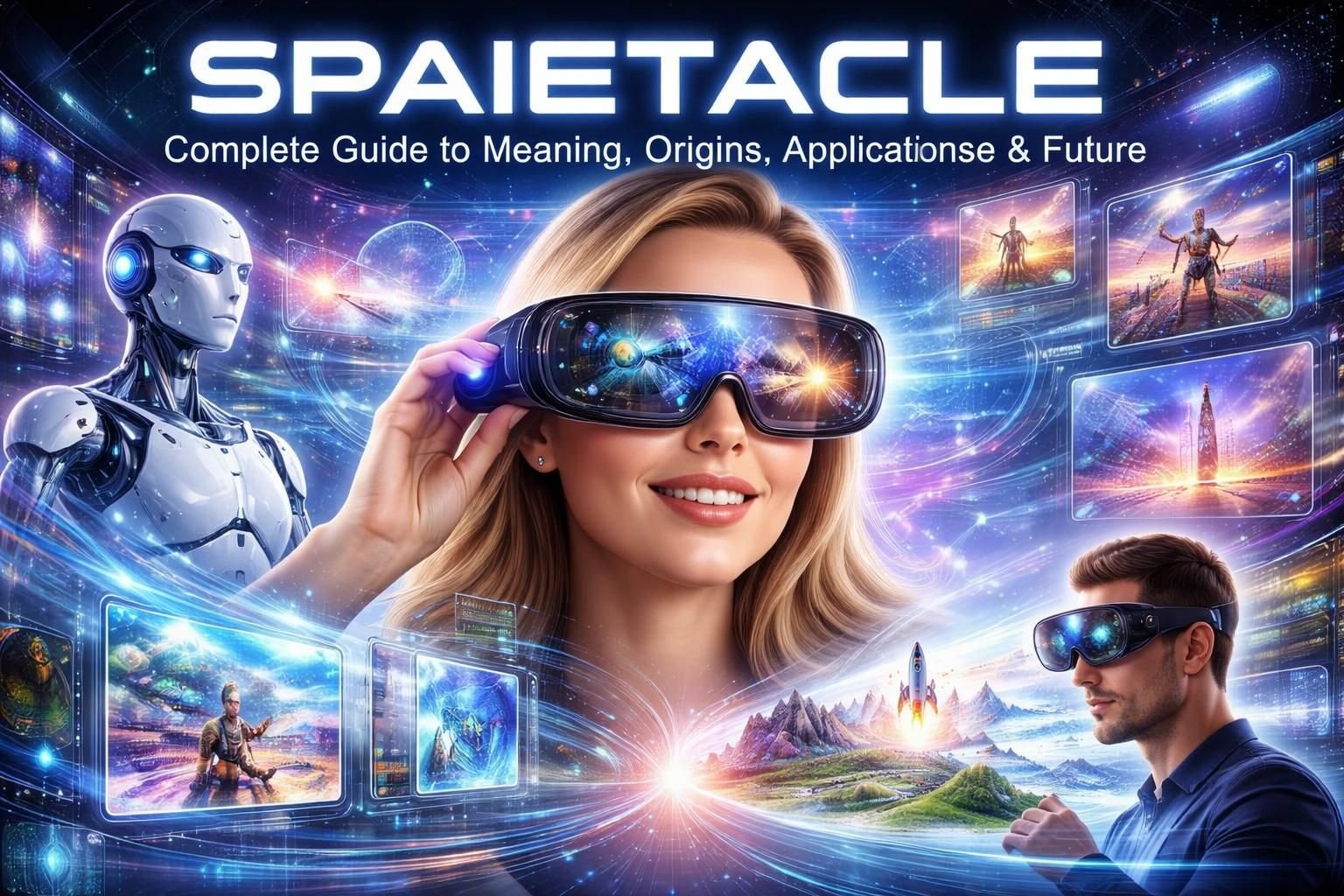
What Is Spaietacle?
Spaietacle is a portmanteau of “space” and “spectacle” — a concept that describes immersive, multi-sensory experiences where the environment itself becomes the central storytelling medium. Unlike a traditional show you simply watch, a spaietacle is an experience you inhabit. It combines spatial design, visual storytelling, sound, light, interactive technology, and emotional narrative to transform any environment — physical or digital — into an unforgettable participatory encounter. In 2026, spaietacle has become a defining framework in art, education, brand marketing, live events, and digital platform design, representing a new gold standard for how creators connect with audiences in the experience economy.
The Meaning and Etymology of Spaietacle
The word spaietacle draws from two powerful roots: the Latin spatium, meaning space or area, and spectaculum, meaning a show or something worth seeing. Together they form a concept that is more than a portmanteau — it is a design philosophy. A spaietacle is not defined by any single medium or format. It can manifest as a walk-through art installation, a concert where the stage design transforms the venue, a brand activation event, a museum exhibit, a digital platform, or an educational environment designed for participatory discovery.
What unites all forms of spaietacle is the deliberate integration of space as a storytelling element. The physical or digital environment is never just a container — it is an active participant in the narrative. This is what distinguishes spaietacle from conventional entertainment, where audiences remain passive observers seated at a fixed distance from the performance.
The term began gaining meaningful cultural traction in the early 2000s as digital projection, spatial audio, sensor technology, and augmented reality became increasingly accessible to artists, designers, and event creators. By the 2020s, the concept had spread well beyond theatrical spaces into brand strategy, educational design, wellness experiences, and digital platform architecture.
The History and Origins of Spaietacle
Ancient Roots of Immersive Space
The impulse behind spaietacle is as old as human culture itself. Ancient civilizations used space for collective storytelling — seasonal rituals, processions through sacred landscapes, communal festivals in natural amphitheaters. In these moments, movement through a designed environment carried meaning. Participants were not spectators but co-creators of the experience.
Greek amphitheaters, Roman processions, Gothic cathedrals with their overwhelming scale and light — all represent early spaietacle thinking. The environment was crafted to evoke awe, participation, and a sense of being inside something greater than oneself.
The 20th Century: Breaking the Fourth Wall
As theater formalized during the early modern period, performances retreated behind proscenium arches — and audiences retreated into fixed seats. But throughout the 20th century, artists and theater-makers pushed back. Site-specific performances placed audiences in warehouses, streets, forests, and rooftops. Participatory art movements of the 1960s and 1970s dissolved the boundary between artwork and observer. Environmental theater, installation art, and performance art all contributed to the intellectual lineage that eventually gave us the term spaietacle.
Digital Acceleration: The 21st Century Turning Point
The true acceleration of spaietacle as a defined cultural phenomenon came with the digital revolution. Projection mapping allowed entire building facades to become moving canvases. Affordable sensor arrays enabled environments to respond to audience presence in real time. Spatial audio created soundscapes that changed as visitors moved through a room. Augmented reality layered digital narratives over physical environments. Virtual reality offered entirely constructed immersive worlds.
These technologies did not replace human storytelling — they expanded the creative palette available to artists and experience designers. By 2026, spaietacle has evolved into both an artistic discipline and a commercial strategy, with dedicated academic programs, professional certification courses, and entire companies specializing in immersive experience design.
Core Elements of a Spaietacle Experience
Understanding what makes a spaietacle requires looking at its foundational components. These elements work in concert — removing any one of them typically reduces the experience from a spaietacle to a more conventional presentation.
Spatial Design and Environmental Storytelling
The environment is never neutral in a spaietacle. Every architectural choice — the width of a passageway, the height of a ceiling, the texture of a surface, the placement of light sources — carries narrative and emotional weight. Designers use spatial choreography to guide audiences through an unfolding experience. Narrowing corridors create tension. Sudden open chambers create revelation. Unexpected sounds at thresholds create curiosity. Space becomes, in essence, a verb.
Multi-Sensory Engagement
True spaietacle engages more than sight. Sound, tactile surfaces, movement, scent, and even temperature can all be deployed to deepen immersion. The psychology underpinning this is well established: human beings retain multi-sensory experiences far more effectively than single-sense ones. A spaietacle that engages hearing, touch, and movement alongside vision creates a memory architecture that lasts far longer than a conventional performance or display.
Interactivity and Audience Participation
One of the defining features of spaietacle is that the audience moves, responds, and participates rather than merely watching. Characters and environments may respond to audience actions. Motion sensors trigger lighting changes. Sound follows visitors as they walk. Choices made by participants alter the narrative path. This interactivity transforms the relationship between storyteller and audience from one-directional broadcast into a genuine dialogue.
Emotional and Narrative Depth
Visual spectacle alone does not constitute a spaietacle. The experience must be anchored in a clear emotional intention — a story, a theme, a social issue, or a journey that gives meaning to every spatial and sensory element. Without narrative depth, even the most technologically impressive installation risks feeling gimmicky or hollow. The most enduring spaietacles are those where audiences remember the feeling as vividly as the visuals.
Technology as a Tool, Not a Goal
Spaietacle should never make technology the hero of the story. Projection mapping, AR overlays, motion sensors, and spatial audio are all instruments in service of the human experience. When technology overshadows storytelling, the experience loses its emotional resonance. The best spaietacle designers understand this balance intuitively — they use technology to deepen meaning, not to replace it.
Spaietacle Across Industries and Applications
One of the most remarkable qualities of spaietacle as a concept is its cross-industry applicability. It is not the exclusive property of the art world. In 2026, its principles are being actively applied in commercial, educational, therapeutic, and digital contexts.
Art Installations and Contemporary Museums
Museums and galleries have been among the earliest institutional adopters of spaietacle thinking. Digital art exhibitions now routinely transform entire gallery spaces using projection mapping and interactive technology, making visitors part of the artwork rather than observers of it. Immersive exhibitions — where audiences walk through constantly changing digital landscapes — have become among the most visited and commercially successful museum events globally. These installations demonstrate how spaietacle can serve both artistic and institutional goals: deepening engagement, increasing accessibility, and making complex concepts emotionally tangible.
Live Events, Concerts, and Festivals
In the live events industry, spaietacle represents the highest ambition of experience design. Concerts where stage design transforms the entire venue — where light maps onto the audience as much as the stage, where sound moves spatially around listeners — exemplify spaietacle at scale. Music festivals have embraced the concept through themed environmental zones, immersive art installations between stages, and interactive experiences that extend the event narrative beyond the performances themselves. For event planners and creative directors, spaietacle offers a vocabulary and framework for designing events that audiences will describe for years.
Brand Activations and Marketing Environments
In commercial contexts, spaietacle has become a powerful differentiator in an era of content saturation. Brands that create immersive experiential environments — whether at trade shows, pop-up retail spaces, or product launches — generate levels of engagement and emotional recall that conventional advertising cannot match. Retail spaces are evolving into interactive showrooms where customers explore brand stories rather than simply browsing shelves. Hospitality venues are designing themed environments that blend entertainment with service. The experience economy is, in many ways, the commercial expression of spaietacle thinking.
Education and Personalized Learning
Perhaps the most socially significant application of spaietacle is in education. Gamified learning environments, immersive classroom simulations, and adaptive digital tools that respond to individual learner behavior all draw on spaietacle principles. When students are placed inside a narrative — when history becomes a walkable environment, when science becomes an interactive simulation — retention, engagement, and critical thinking all improve measurably. Educational innovators have recognized that the most powerful learning happens when students feel physically and emotionally present within the subject matter, not just intellectually adjacent to it.
Wellness and Therapeutic Environments
Spaietacle principles are increasingly applied in therapeutic and wellness contexts. Sensory rooms designed for individuals with autism spectrum conditions, meditation spaces that use light and sound to guide practitioners, hospital environments designed to reduce patient anxiety through environmental storytelling — all reflect the therapeutic potential of intentional spatial design. Candlelit memorial walks, sound installations triggered by movement, and nature-integrated healing spaces demonstrate that spaietacle can serve profoundly human needs beyond entertainment.
Digital Platforms and Online Experiences
In the digital domain, spaietacle has informed the design of interactive platforms that prioritize immersive user experiences over passive content consumption. Emerging platforms blend social networking, live performance, collaborative creation, and interactive storytelling in ways that make users feel genuinely present within a shared creative space. Virtual reality environments, augmented reality applications, and AI-responsive digital interfaces all represent the frontier of digital spaietacle — experiences that feel less like software and more like inhabitable worlds.
How to Create a Spaietacle: A Practical Framework
Creating a genuine spaietacle requires both artistic vision and logistical precision. The following framework reflects best practices developed by immersive experience designers across industries.
Define the Emotional Intention
Every spaietacle begins with a clear answer to one question: what should the audience feel when they leave? Before any spatial or technological decision is made, the emotional arc must be defined. Whether the goal is wonder, grief, exhilaration, reflection, or connection, this emotional intention governs every subsequent design choice.
Map the Spatial Journey
Identify the physical or digital flow of the experience. Where does the audience enter? What thresholds do they cross? Where are the moments of revelation, tension, and resolution? Every path, portal, and open space should serve the narrative. Consider how movement itself can carry meaning — how the act of walking, turning, pausing, or discovering can be choreographed to deepen the story.
Design the Sensory Layers
Once the spatial journey is mapped, layer sensory elements onto it with intentionality. Lighting design should reflect the emotional temperature of each zone. Sound design should respond to audience presence and movement. Tactile elements should invite touch and physical engagement. Scent, temperature, and even taste can be incorporated where appropriate and accessible.
Integrate Technology Thoughtfully
Select technologies that serve the narrative rather than technologies that impress on their own terms. Projection mapping, motion sensors, spatial audio, AR overlays, and interactive interfaces should be chosen based on their capacity to deepen emotional engagement. Build in redundancy and test extensively before live deployment — technical failures break immersion irreparably.
Prioritize Accessibility and Inclusion
A spaietacle that excludes participants based on physical ability, sensory sensitivity, or socioeconomic access has failed its core mandate. Design quiet zones and alternative sensory paths. Ensure mobility access throughout the experience. Make pricing and ticketing structures that broaden rather than narrow participation. The most powerful spaietacles are those that feel designed for everyone.
Test, Refine, and Iterate
Before going live, run preview audiences through the experience and gather rigorous feedback. Pay particular attention to pacing — where does the experience drag? Where does it overwhelm? Adjust the rhythm of sensory input, the clarity of navigational cues, and the technical reliability of interactive elements. A spaietacle is never truly finished; it evolves through audience response.
The Science Behind Spaietacle: Psychology and Perception
The effectiveness of spaietacle is not merely aesthetic — it is grounded in well-established principles of human psychology and perceptual science.
Research in cognitive psychology consistently demonstrates that multi-sensory experiences produce stronger, more durable memories than single-sense encounters. The phenomenon of embodied cognition — the idea that physical movement and environmental context shape how we think and feel — explains why inhabiting a designed space changes the nature of the experience in ways that simply watching it cannot replicate.
Color psychology plays a significant role in spaietacle design. Warm hues stimulate energy and excitement; cool tones induce calm and reflection. Lighting contrast focuses attention and creates emotional punctuation. Architectural scale affects feelings of power, vulnerability, and awe. Sound frequency and spatial distribution influence emotional state in ways that bypass conscious analysis.
The psychology of surprise and discovery is also central. When audiences encounter the unexpected — a sound that follows them, a wall that responds to touch, a passage that reveals something they did not anticipate — dopamine release creates a pleasurable engagement loop that sustains attention and deepens memory formation. This is why the best spaietacles are consistently described as experiential rather than visual: they engage the whole nervous system, not just the eyes.
Challenges and Ethical Considerations in Spaietacle Design
Despite its transformative potential, spaietacle faces significant practical and ethical challenges that responsible creators must address.
Cost and Accessibility Barriers
High-quality immersive experience design requires investment in technology, specialized expertise, and physical infrastructure that can be prohibitive for smaller organizations and independent artists. This creates a risk of spaietacle becoming a luxury experience available only to affluent audiences in major metropolitan areas. Many designers are addressing this through modular and scalable approaches that reduce production costs without sacrificing experiential quality.
Environmental Sustainability
Temporary immersive installations can generate substantial material waste. As spaietacle experiences proliferate, the environmental footprint of their production requires active management. Designers like Monika Leveski and others at the forefront of the field are pioneering sustainable approaches — using reclaimed materials, energy-efficient lighting systems, and demountable structures that can be reused or repurposed after an installation ends.
Consent and Data Privacy
Interactive environments that respond to audience presence often rely on motion sensors, cameras, and data collection systems. Responsible spaietacle design includes transparent communication about what data is being collected, how it is used, and how participants can opt out. Consent in immersive experiences extends beyond data to physical and emotional boundaries — audiences should understand the nature of an experience before entering it, particularly when it involves emotional intensity or close physical proximity.
Avoiding Spectacle Without Substance
Perhaps the most fundamental ethical challenge in spaietacle design is the temptation to prioritize visual impact over meaningful content. The proliferation of Instagram-optimized immersive experiences — designed primarily to generate shareable images rather than genuine emotional or intellectual engagement — represents a corruption of the spaietacle concept. When form consistently overrides function, audiences eventually recognize and disengage from the hollowness. The future of spaietacle depends on creators maintaining the primacy of authentic storytelling over technological showmanship.
The Future of Spaietacle in 2026 and Beyond
The trajectory of spaietacle in 2026 points toward deeper integration with artificial intelligence, extended reality technologies, and community-centered design thinking.
AI-responsive environments that adapt in real time to individual audience members — adjusting narrative pacing, sensory intensity, and interactive elements based on observed engagement — represent the next frontier. These systems can create genuinely personalized spaietacle experiences at scale, moving beyond the one-size-fits-all design that characterizes even the most sophisticated current installations.
Extended reality — the convergence of augmented, virtual, and mixed reality — will increasingly blur the boundary between physical and digital spaietacle environments. Audiences will move between physical installations and their digital extensions seamlessly, with wearable technology mediating the transition. This convergence will expand the geographic reach of spaietacle beyond fixed physical venues, allowing participation from anywhere in the world.
Community co-creation is emerging as a central value in forward-looking spaietacle design. Rather than delivering a finished experience to a passive audience, the most innovative creators are designing frameworks within which communities build their own spaietacles — using provided tools, spaces, and narrative structures to generate experiences that reflect their own stories, identities, and values. This participatory authorship represents the deepest expression of what spaietacle can be: not a spectacle delivered to an audience, but an experience created by one.
Frequently Asked Questions (FAQs)
What does spaietacle mean?
Spaietacle is a term that blends “space” and “spectacle.” It describes an immersive, multi-sensory experience where the physical or digital environment is designed as the primary storytelling medium. Unlike a conventional show or exhibition, a spaietacle places the audience inside the narrative, making them active participants rather than passive observers. The concept encompasses art installations, live events, brand activations, educational environments, and digital platforms that prioritize experiential depth over simple visual display.
Where did the word spaietacle come from?
The word spaietacle draws from the Latin spatium (space) and spectaculum (spectacle or show). While the portmanteau is relatively recent — gaining meaningful cultural traction in the early 2000s — its underlying principles trace back centuries to ancient ritual, site-specific theater, and participatory art movements of the 20th century. The digital revolution of the 2000s and 2010s accelerated its development by making projection mapping, spatial audio, sensors, and AR widely accessible to creators.
How is spaietacle different from virtual reality?
While virtual reality creates a fully digital immersive environment that replaces physical reality, spaietacle typically keeps participants in the physical world while transforming how that world is experienced. Spaietacle is also distinct from VR in its emphasis on social participation — most spaietacle experiences involve groups of people moving through a shared environment together, rather than individuals isolated in a digital headset. That said, VR can be used as a component within a broader spaietacle experience.
What industries use spaietacle?
Spaietacle is applied across a wide range of industries in 2026. The arts and culture sector uses it in museum exhibitions, immersive theater, and public art installations. The events industry uses it in concerts, festivals, and corporate experiences. Marketing and retail leverage spaietacle for brand activations, pop-up environments, and experiential campaigns. Education uses spaietacle principles in gamified learning, adaptive digital tools, and immersive classroom simulations. Healthcare and wellness apply it in therapeutic environments, sensory rooms, and healing spaces.
How do you create a spaietacle experience?
Creating a spaietacle begins with defining a clear emotional intention — what should the audience feel when they leave? From there, designers map a spatial journey, layer multi-sensory elements including lighting, sound, and tactile features, and integrate interactive technology thoughtfully. Accessibility and inclusion must be built into the design from the outset. Extensive testing with preview audiences allows for refinement before launch. The key principle throughout is that technology serves storytelling — not the other way around.
What is the difference between spaietacle and immersive theater?
Immersive theater is one specific form of spaietacle, typically involving live performers who interact with audience members across a designed environment. Spaietacle is a broader concept that encompasses immersive theater but also includes technology-driven art installations, brand experiences, educational environments, wellness spaces, and digital platforms. All immersive theater is spaietacle, but not all spaietacle is immersive theater.
What are the biggest challenges in spaietacle design?
The primary challenges include high production costs that limit accessibility, environmental sustainability of temporary installations, data privacy and consent in sensor-driven environments, and the risk of prioritizing visual spectacle over meaningful content. Responsible spaietacle designers address these challenges through modular and scalable production approaches, eco-friendly materials, transparent data policies, and a consistent commitment to narrative depth as the foundation of every design decision.
Is spaietacle relevant for education?
Spaietacle is highly relevant to education and is increasingly being adopted in learning environments globally. When students are placed inside an immersive narrative — when historical events become walk-through experiences, when scientific principles become interactive simulations — engagement, retention, and critical thinking improve measurably. Educational spaietacle also supports personalized learning by creating adaptive environments that respond to individual learner behavior and need, rather than delivering the same content uniformly to an entire class.
What does the future of spaietacle look like?
The future of spaietacle involves deeper integration with artificial intelligence, extended reality, and community co-creation. AI will enable environments that adapt in real time to individual participants. Extended reality will blur the boundary between physical and digital spaietacle experiences. Community co-creation frameworks will allow audiences to become authors of their own spaietacles rather than recipients of pre-designed experiences. These developments point toward a future where spaietacle is not an event you attend occasionally but a dimension of how environments are routinely designed and experienced.